
 Language
About Us
Customer demand background
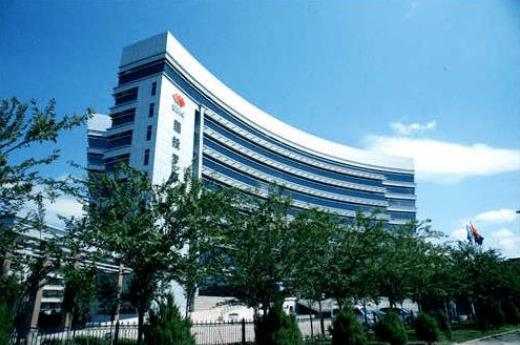
Guotou Xinjiang Lop Nur Potassium Salt Co., Ltd. (hereinafter referred to as the company) was established in September 2000 and became a holding enterprise of the National Development and Investment Corporation in 2004. The company has a total assets of 8 billion yuan and its main business is to develop natural brine resources in Lop Nur to produce potassium sulfate. The company has an annual production capacity of 1.6 million tons of potassium sulfate and 100000 tons of potassium magnesium sulfate fertilizer, making it the world's largest single potassium sulfate production enterprise.
The company has 23 secondary units (departments), 1 wholly-owned subsidiary, and 1 holding subsidiary, with an office in Urumqi. There are over 3000 employees in total.
After the establishment of the company, relying on its own technological strength and drawing on the experience of salt lake development at home and abroad, it started in difficulties and advanced through exploration. Since 2000, it has carried out exploratory, small-scale, and pilot tests in the hinterland of Lop Nur, built an industrial experimental plant project and an annual output of 1.2 million tons of potassium fertilizer project, created the "Lop Potassium Speed" and "Lop Potassium Quality", and wrote a brilliant chapter in the "Sea of Death".
The company has established a research and manufacturing base for power batteries and energy storage systems, possessing core technologies throughout the entire industry chain including materials, battery cells, modules, battery management systems, battery packs, and battery recycling. The company is committed to providing efficient energy storage solutions for global green energy applications through advanced battery technology.
C6 Key Solutions
Guotou Luokang (Hami) Property Management Company has established a cooperative relationship with our company since December 2014 to jointly promote the construction of the property one card project. The new one card project is used to replace the Hangzhou Cube M1 card consumption system and achieve more comprehensive one card application through the C6 platform and related integration.
The construction area of the first phase of the property one card project involves Hami base, storage base, Lake District One Science and Technology, and Lake District Two Science and Technology (including Malan, Mixi, and brine transportation 1).
The first phase of the Property One Card project is committed to the construction of a cross regional consumption system, conference room access control, cafeteria access control, dormitory management and access control (Hami base), bank deposit, self-service vending, self-service inquiry and recharge, supermarket cashier, supermarket anti-theft and other projects throughout the factory. Through the matching use of CPU bank employee cards, conventional CPU service cards and CPU mobile card media, a fully integrated one card private wallet application based on the Haiweida C6 platform, OA application, bank data exchange, Bank of China online banking, Bank of China Yishang APP application, C6 APP application will be created. The new one card will provide more convenience for employees and improve the management level and multi-channel data integration management ability of the Property One Card through information sharing and other means.
The property one card system collects and processes data through various means such as mobile network, GPRS communication, internal network, VPN, Internet network, bank dedicated line, etc., and uses various one card terminal devices to implement property applications.
In the initial stage of the IoT card system, the Bank of China issued approximately 3300 platinum cards (700 in reserve), and approximately 1300 regular CPU service cards and mobile cards (1700 in reserve). The Bank of China Employee Platinum Card, as a product of cooperation between the property management company, Bank of China, and Haiweida, can be used as a regular bank card and can also provide employees with many conveniences such as free nationwide withdrawal fees, preferential loans, personal account funds and property one card recharge and transfer, etc. Through tripartite cooperation, Bank of China has expanded its card issuance volume, achieving more circulation and collection of funds. And the enterprise itself has also saved procurement costs, providing convenience for employee services through the free deployment of bank related equipment and applications.
This project started construction on December 13, 2014. During this period, changes in quantity and functionality were completed through cooperation with banks, changes in bank cards, and reassessment and confirmation of construction locations. Some equipment such as consumer machines, self-service vending machines, supermarket software, and APP applications were re selected and confirmed. The initial construction wiring and installation and commissioning of access control equipment were successfully completed on April 15, 2015.
Due to factors such as the selection of CPU consumption devices, the confirmation and production of CPU cards in cooperation with Bank of China, the design of CPU card layouts, the construction of self-service centers, and the selection of self-service vending machines, the entire project schedule has been postponed to September 2015 for trial operation, and officially launched and completed all device switching on October 1st.